Review: Juliana by Vanda

Kate Cudahy's avatarKate Cudahy

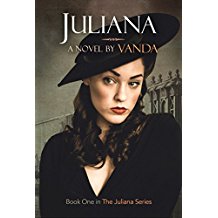
410gFjGjFvL._AC_US218_Juliana is set in New York in the early years of World War II. Alice (Al Huffman) arrives in the city fresh from the provinces and keen to make her name and fortune on Broadway. Accompanying her are her childhood friends, all of them bright-eyed, naive and full of hope.

The war and city life conspire to strip them of their illusions and to disrupt their lives in ways they could never have imagined. For Al, this entails a journey into self-awareness as she struggles to come to terms with the attraction which she feels for beautiful night club singer Juliana.

This is a novel which throws into relief the extent to which social attitudes have changed in relation to LGBT identities and rights. Al and Juliana live within a society which views same sex relations as a sickness, and in which lesbians and gay men are viewed as ‘sexual…

View original post 148 more words
Review – The Essex Serpent – Sarah Perry

Kate Cudahy's avatarKate Cudahy

Sarah Perry’s latest novel proves to be as elusive a beast as the Essex Serpent itself: a story which coaxes the reader into a literary terrain every bit as shifting and unstable as the salt marshes amongst which it is set.

Following the death of her abusive husband, Cora Seaborne sets about reinventing herself – stretching her wings and re-evaluating her relationship with her friends, and with society in general.  Freeing herself from the disapproving gaze of Victorian London, Cora moves to Essex in the hope of scouring the local beaches for fossils. Intrigued by the possibility that a “living fossil” may have been sighted near the village of Aldwinter, with local sightings of a winged sea beast reported, she moves there with her friend Martha and autistic son Frankie.

In truth, if there is any geology to be had in this novel, it is of the personal sort –…

View original post 244 more words

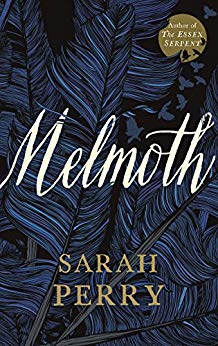
Review: Melmoth by Sarah Perry

Kate Cudahy's avatarKate Cudahy

61ZVElhN+fL._SY346_

Review: Melmoth by Sarah Perry

Neo-gothicism seems to be the order of the day in contemporary British literature, with writers like Sarah Perry, Sarah Waters and Andrew Michael Hurley all offering new takes on a much out-moded genre. What all these authors have proved is that the gothic – with its hauntings and secrets, its dark retreats and the way it plays on our most hidden fears – offers perfect territory for exploration of all that we would still repress, even in our current age of confession, self-expression and over-sharing.

What Perry achieves in Melmoth is nothing short of astounding, and I have to admit that as much as I enjoyed her previous outing The Essex Serpent, Melmoth proved a more satisfying read, abounding in cunning devices which deceive and challenge the reader. To such an extent, in fact, that Perry claims one American newspaper was entirely taken in…

View original post 369 more words

Review: Public Library by Ali Smith

Kate Cudahy's avatarKate Cudahy

Public library and other stories by [Smith, Ali]

Recently I ordered a couple of ‘real feel’ copies of works by or about Ali Smith – Girl Meets Boy, and a collection of critical essays on her work. I already had one of these books on my Kindle, but as I needed volumes with page numbers, I decided to order from second hand bookshops. When both books arrived, they were coated in library issue plastic covers, and one of them still contained stamps from Dulwich public library. Coincidentally, I was just reading Smith’s volume of short stories Public Library, which addresses the demise of this treasured institution across the UK following a decade of local government cuts and austerity.

It was both ironic and deeply saddening, and it made me think of what a focal point the library was in the small Derbyshire town where I grew up. (I’m happy to say that’s one book palace which…

View original post 350 more words

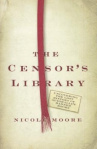
The Censor’s Library, by Nicole Moore

Lisa Hill's avatarANZ LitLovers LitBlog

The Censor's LibraryThe Censor’s Library really is a very interesting book.  Prior to reading it, I had thought that censorship in Australia was mostly a matter of wowserism, but Nicole Moore makes it clear that there was much more to it than that.

The Censor’s Library covers so much territory that it’s hard to know where to begin.  I read a chapter or so each morning over weekday breakfasts for the best part of six weeks, and often found myself scribbling down thoughts while my cereal went soggy and my coffee cooled.  I have scraps of commentary all through the book on the backs of envelopes and sticky notes, and just writing this review makes me want to read parts of it again, particularly since the book has been shortlisted in the Prime Minister’s Literary Awards in the Prize for Australian History category.   Exploring 12000 banned items held in 793 boxes covering 60 years of…

View original post 1,180 more words

The Burning Library, by Geordie Williamson

Lisa Hill's avatarANZ LitLovers LitBlog

 My first response to seeing the chapter headings in Geordie Williamson’s The Burning Library,Our Great Novelists Lost and Found was, ‘Oh good, I’ve read most of these authors!’  That’s not as facile as it sounds, because it means that since I agree with Geordie Williamson’s choices about these being wonderful authors who shouldn’t be forgotten, I can trust his opinion on the ones I don’t know and get hold of a copy of them quick smart!

I’m one of the ordinary readers that Geordie Williamson hopes will rescue our collective Australian literary achievement from oblivion.  His cogent argument is that our education institutions have all but abandoned teaching Australian literature, and that some of our best, most brilliant writers are all but forgotten,their backlists abandoned by publishers.  Well, The Burning Library is an excellent introduction to some of these authors, and it belongs on the bookshelves of every booklover in the nation.

Now this is not…

View original post 2,145 more words

Bring Larks and Heroes, by Thomas Keneally

Lisa Hill's avatarANZ LitLovers LitBlog

Bring Larks and Heroes (Text Classics)If you’re an Australian reader of this blog, you have to have been under a rock not to have seen Michael Heyward from Text Publishing as passionate champion of Australian classic literature.  I think that Text’s new collection of Text Classics is a great initiative – and I especially like the way it fits nicely with my project to read all the Miles Franklin winners.

Bring Larks and Heroes won the Miles Franklin in 1967, the third novel in Thomas Keneally’s long and impressive career as an Australian novelist.  Reading it is a little bit like finding an undiscovered Patrick White, because its style, to my surprise, is modernist – utterly unlike Keneally’s later novels that I’ve read: Schindler’s Ark a.k.a. Schindler’s List (which won the Booker in 1982); The Chant of Jimmie Blacksmith, (see my review); and The Widow and Her Hero (see my review).  I think it would be…

View original post 768 more words

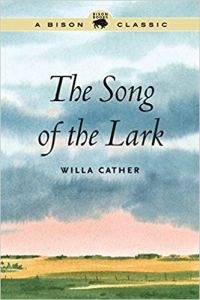
The Song of the Lark, by Willa Cather

Lisa Hill's avatarANZ LitLovers LitBlog

I’d never heard of Willa Cather until Sue at Whispering Gums reviewed some of her work, and I read a couple of her stories digitally via Library of America as she suggested.  So when I spied The Song of the Lark at the library, I whisked it off home with me, and have just romped through it in 24 hours.  Sometimes it’s a real pleasure to read an undemanding old-fashioned novel and I don’t mean that in a dismissive way.  There’s plenty to think about in The Song of the Lark and the writing is beautiful but there are no complex plot structures to sort out and everything is tidily chronological.  Perfect for leisurely reading in the lazy aftermath of Christmas!

Set near the turn of the 20th century, The Song of the Lark tells the story of Thea Kronborg and her quest to transcend humble beginnings in small town (fictional) Moonstone…

View original post 552 more words

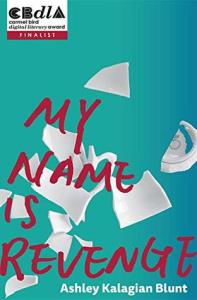
My Name is Revenge, by Ashley Kalagian Blunt

Lisa Hill's avatarANZ LitLovers LitBlog

It’s not that I hadn’t kept up with the inaugural Carmel Bird Digital Literary Award: it’s just that two of the three finalists were short story collections and I prefer novels.  But a chance ‘like’ on one of my tweets, led me to a novella among the finalists, and although IMHO the novella turned out to be more of a short story at only 48 pages, I wasn’t disappointed, because it’s very good indeed.  And as a bonus, there’s also a very thoughtful essay about historical denial, pragmatic politics, political radicalisation and the dilemma of truth-telling about the past without fostering resentment and vengeance.

Set in Sydney in 1980, My Name is Revenge is the story of a young man of Armenian origin.  Named as a reminder of the Armenian genocide in 1915, and intensely resentful of his school’s insistent denial of authenticated history, Vrezh idolises his older brother…

View original post 643 more words

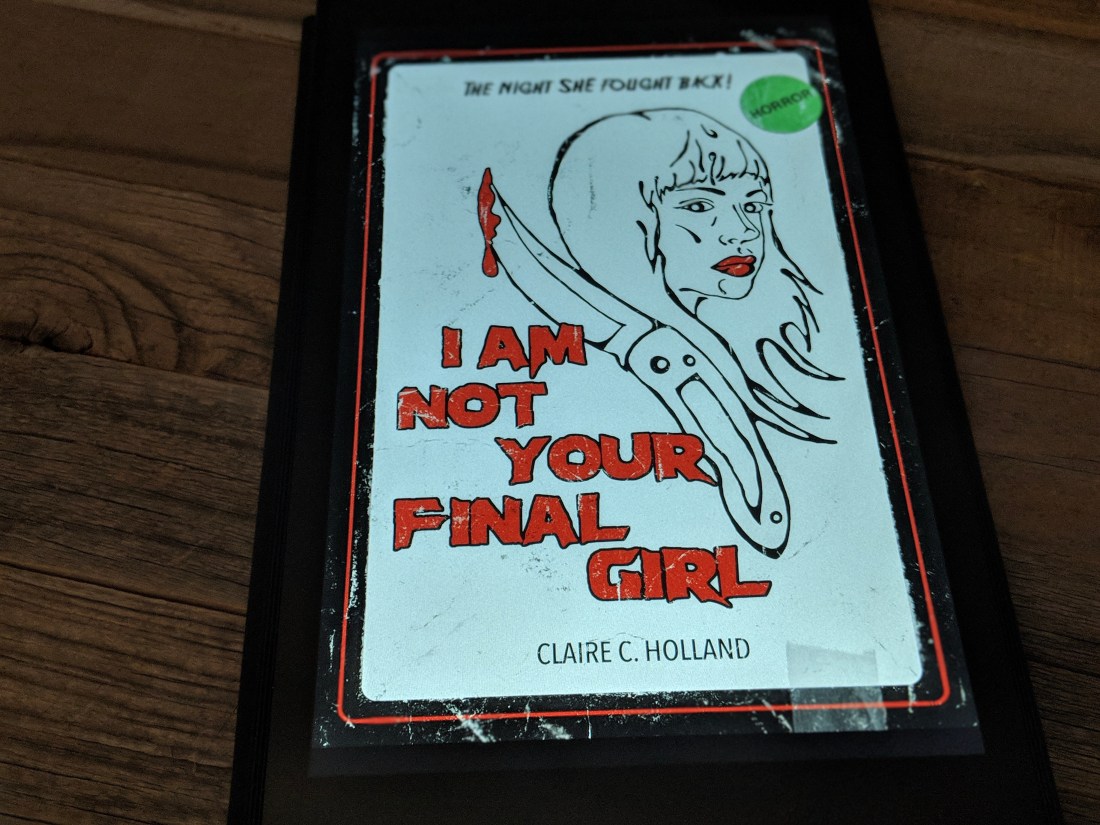
I am Not Your Final Girl: Poems By Claire C. Holland

Toni_The_Reader's avatarThe misadventures of a reader

I’ve watched a good deal of 80s and 90s slasher movies. There was always the one girl that normally was a fighter; who fought but she eventually succumbed. Or She fought through the night and was able to hobble her way to freedom the next day.  I found that I rooted for them as they hobbled through the forest and the dark. So whether you fancy yourself Laurie from Halloween or Nancy from Friday the 13th this dark poetry book is defiantly for you.

00100dPORTRAIT_00100_BURST20180922133744588_COVER

Summary: Poems based on the final girls in popular horror movies.

What I liked: I have really enjoyed all the dark and horror related poetry I have been reading lately. I really enjoyed the concept of the book. The poems were dark and disturbing. What I thought was interesting was that this was the Holland’s feelings about these women, brought about by the political climate. I…

View original post 190 more words