Writing is a Business: IWSG

ANOTHER GREAT SITE, CHINA

DRShoultz's avatarD.R. SHOULTZ - Author

It’s time for my November contribution to the Insecure Writer’s Support Group (IWSG) blog hop. This month I varied from the recommended topic to discuss my recent marketing ventures.  Be sure to click on the #IWSG icon at the end of my post and check out the responses from dozens of interesting, experienced writers.


Being a self-published author is like running your own business. There’s a lot about writing books that I like, or else I wouldn’t do it.  But there are many activities I’m not that crazy about.

I like that I set my own schedule.  I don’t have a publisher or agent looking over my shoulder checking on the content and status of my next book.  Most of what I do is at my own pace.  Don’t get me wrong. If an agent or publisher would take me on, I’d be glad to crank out books on their…

View original post 412 more words

Paris Echo by Sebastian Faulks #bookreview #tarheelreader #thrparisecho @sebastianfaulks @henryholt #parisecho

A GREAT BOOK REVIEWER, CHINA

jennifertarheelreader's avatarJennifer ~ Tar Heel Reader

20181030_212659.jpg

Happy Wednesday!  Today I have a review of Paris Echo, a new release by Sebastian Faulks, now available via Henry Holt publishing!


My Thoughts:

Hannah is an American historian, and she’s studying World War II in Paris (sounds like something I’d love to do!). She harbors some resentment towards the City of Lights due to something in her past when she was younger. 

Hannah meets Tariq, a Moroccan teenager, who sees Paris as a land of opportunity in stark contrast to his own he is fleeing. In need of a place to stay, he ends up boarding with Hannah. Both Hannah and Tariq are very much outsiders to the city. 

Tariq begins to see Paris in a different, more complicated light, and at the same time, Hannah discovers something in her research that shakes her to her very core. 

With themes of inequity and corruption versus dreams…

View original post 257 more words

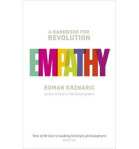
Empathy, A Handbook for Revolution, by Roman Krznaric #BookReview

Lisa Hill's avatarANZ LitLovers LitBlog

EmpathyEmpathy by Roman Krznaric is what I call ‘pop-philosophy’. Like the popular works of Bertrand Russell and Alain de Botton it’s easy to read, and it tackles the sort of every day philosophical issues that ordinary people think about it even if they don’t necessarily identify these preoccupations as philosophy.  

But whereas Russell wrestles with big picture issues e.g. as in Authority and the Individual where he explored the importance of balancing freedom with a well-ordered society, de Botton and Krznaric are more in the ‘lifestyle philosophers’ camp.   De Botton has written about everything from travel to status anxiety (and I’ve browsed his books but never really engaged with them) while others in this camp are Damon Young whose Philosophy in the Garden is a booklover’s delight: it explores the gardens of great authors and how these gardens provided a refuge for thought and creativity.

Krznaric is a prolific author too.  According…

View original post 493 more words

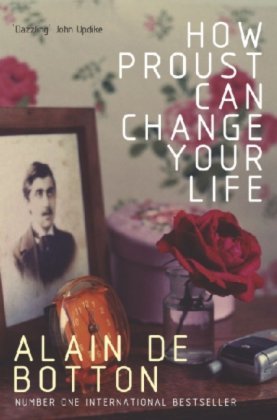
How Proust Can Change Your Life, by Alain de Botton #BookReview

Lisa Hill's avatarANZ LitLovers LitBlog

How Proust Can Change Your LifeHow Proust Can Change Your Life is another book that’s been languishing too long on the NF TBR and rediscovered in the annual Tidy the Bookshelves marathon chez moi.   Did I buy it back in 1998 when this edition was published, barely a year after its debut?  It must have been a bestseller, (and it claims to be so on the front cover) which is interesting because, well,  we know that not a lot of people have actually read Proust.  I certainly hadn’t back in 1998… I didn’t actually read Proust until the Penguin translation came out and I read the entire thing over about eighteen months in 2004-5, twenty minutes a day on the exercise bike before I went to work.  It took me ages to read, yes, because it’s long, but also because I used to drift off into Proustian reveries (which is not a bad way to stave…
View original post 1,386 more words

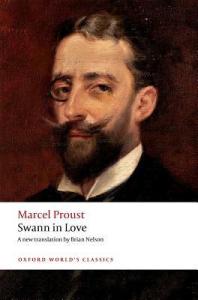
Swann in Love, by Marcel Proust, a new translation by Brian Nelson #BookReview

Lisa Hill's avatarANZ LitLovers LitBlog

I feel I’ve had a privileged insight into the birth of this book.  Back in April, it was my good fortune to attend a Celebration of French Literature hosted by AALITRA (the national association for literary translators) at which notable French translators Julie Rose and Brian Nelson spoke about the translation of their latest works. Julie spoke about translating Victor Hugo’s Les Miserables, and Brian read from and talked about his new translation of Proust’s Swann in Love for Oxford World’s Classics, 2017.

Now I have read Proust, the 2002 Penguin edition published in six volumes, which I read over many months back in 2004-5.  The Penguin translation was notable for having had different translators for each volume, which serves to highlight the monumental achievement of C.K. Scott Moncrieff in translating the whole thing between 1922 and 1930.  (Du Côte de chez Swann was first published in 1913, with the last…

View original post 1,283 more words

The Last Summer, by Boris Pasternak, translated by George Reavey #BookReview

ANOTHER GREAT BOOK REVIEW, CHINA

Lisa Hill's avatarANZ LitLovers LitBlog

The Last Summer is only 90-odd pages long in my Penguin Modern Classics edition of 1960, but it’s more than a short story.  Titled Povest (A Tale) when first published in 1934, it’s not listed among Boris Pasternak’s works in the Russian edition of Wikipedia, suggesting that perhaps the original was never published in the USSR as a separate title. (As far as I can tell, that is, using Google Translate’s word сказка meaning fairy tale, fable or story).  Maybe Povest was published in a journal or a collection, and only published separately as a book when it was translated in 1959 by George Reavey and published by Peter Owen in the afterglow of Pasternak’s Nobel Prize in 1959.

The first thing to say about the introduction by Pasternak’s sister Lydia Slater is that it’s more about legacy-building than about clarifying the story.  There are a great many superlatives, and…

View original post 1,874 more words

Delicious Italian Food and a Lack of Cohesion: A Review of Monica Meneghetti’s WHAT THE MOUTH WANTS

CaseytheCanadianLesbrarian's avatarCasey the Canadian Lesbrarian

What the Mouth Wants by Monica Meneghetti is, unfortunately, one of those books that just wasn’t for me. But let me try to talk about it a bit, in a way that will hopefully tell you whether it might be the book for you! First, check out that beautiful cover!

Meneghetti’s book—subtitled “a memoir of food, love, and belonging”—is a memoir told in short, vignette-like passages. Sometimes the passages are quick short, like prose poems. Other times they are more straight-forward recounting of past experiences, albeit occasionally written in the immediacy of present tense. Meneghetti writes about coming out as bisexual in a small town years before gay rights movements became mainstream, her mother’s death from breast cancer when Meneghetti was a teenager, complicated family dinners that are sometimes terrible, polyamory, her abusive dad, and food, food, food.

The memoir is strongly infused with Meneghetti’s traditional Italian-Catholic upbringing, whether she’s…

View original post 451 more words

Petals and Parasols – #NovemberWriting #poetry

Dorinda Duclos's avatarNight Owl Poetry - Dorinda Duclos


She let her memories escape, yesterday’s dreams

Broken pieces of her life, scattered, tattered

Pressed between the pages, sheltered only

By the pale ivory lace, of a faded parasol

This, her only regret, leaving this treasure

Far behind, knowing, it was the last connection

To a life, she no longer cherished, wilted petals

Pressed between pages, the broken pieces of her life

November Writing Prompt – Petals and parasols – Day 6/30

©2018 Dorinda Duclos All Rights Reserved
Photo via Pixabay CC0

View original post

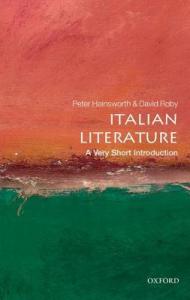
Italian Literature, a Very Short Introduction, by Peter Hainsworth & David Robey #BookReview

Lisa Hill's avatarANZ LitLovers LitBlog

italian-literature-vsiAlong with Dagny a.k.a Madame Vauquer from the Vauquer Boarding House and Jonathan from  Intermittencies of the Mind  I am reading The Leopard (1958) by Sicilian author Giuseppe Tomasi di Lampedusa, so I thought I’d take a look at another VSI.  But it’s not really surprising that Italian Literature, a Very Short Introduction doesn’t mention Lampedusa because he was so very much out of step with postwar developments in Italy.  In the wake of fascism, Italian literature was generally brutally realist, while Lampedusa’s book is a nostalgic novel set in pre-unification Italy.  It doesn’t fit into the characteristics of Italian literature in this period at all.

This VSI is not like the mostly chronological structure of the French VSI which I read a little while ago.  After a useful four-page introduction, the book is framed as general discussions of problematic trends and issues:

  • History
  • Tradition
  • Theory
  • Politics
  • Secularism
  • Women

(Women get a chapter…

View original post 891 more words